Dave Thomas
SEO Best Practices & Portfolio (In Progress)


AI & Large Language Model Optimization

SEO Topics & Terminology (In Progress)
Roadmapping & Planning (In Progress)
Quarterly & Annual Business Reviews (In Progress)

AI & Large Language Model Optimization (LLMO)
What is LLMO?
Large Language Model Optimization (also known as GEO for Generative Engine Optimization or AEO for Answer Engine Optimization) is the process of updating your website to receive mentions and/or citations in AI platforms like ChatGPT, Google Gemini/AI Mode, Perplexity, Claude, and more.
These AI search engines are focused on getting users answers to their specific prompts in a quick and thorough manner. LLMO can help structure the site content and provide recommendations for additional topic targeting to increase share of voice across AI search.
How does LLMO work with SEO (Search Engine Optimization)?
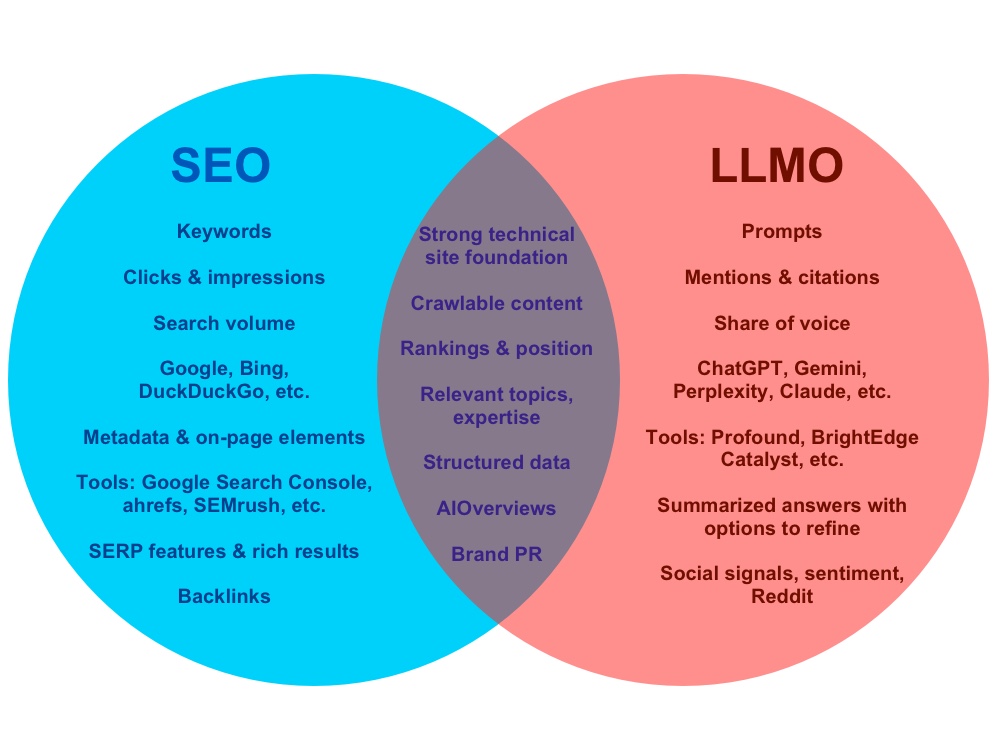
There are a number of best practices that overlap between SEO and LLMO. Both have the goal of providing valuable answers and content to searchers that are relevant to their search query or prompt. SEO has continually developed to move away from specific keyword targeting to achieving topical relevance and increasing the authority/expertise of a website. Google's search engine results pages (SERPs) have also developed to include AI results at the top of the page using Gemini.
AI search optimization or LLMO is an extension of the organic search channel to include additional AI platforms outside of Google, Bing, and other typical search engines. These new platforms can be tracked using a number of different tools like Profound, BrightEdge Catalyst, and more with similar KPIs as Google Search Console (average position, rank, prompts/keywords) along with newer KPIs (mentions, citations, share of voice %).
Methods for improving rankings and position in AI search are similar to SEO rankings including ensuring the site is crawlable for both search and AI bots, formatting content in a digestible manner, and answering the questions being asked by searchers. For mentions and citations, review what competitors are showing up ahead of your site and analyze their content to determine gaps that you might not be covering.
Below is a visual diagram of the overlap and differences between SEO and LLMO:
Tips for LLMO
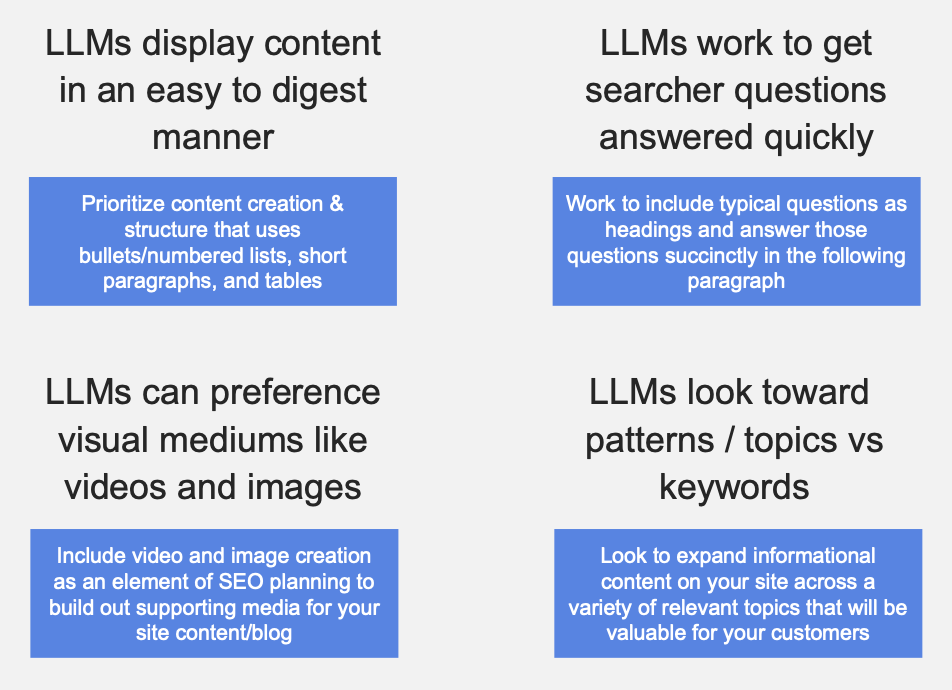
While there are many tips to optimize for Large Language Models, the graphic below can be a helpful starting point when thinking about content structure, media, and answering typical searcher questions quickly.

SEO Topics & Terminology
Canonical tags: These HTML tags (rel="canonical") are used to direct search engines to the authoritative version of a page. Since duplication should be avoided to provide only a single relevant page for a topic/keyword to best improve that page's chance of rankings, canonicals can be used to self-reference the authoritative page or direct to the version that should be used for rankings. An example use would be a category or collection page that can be accessed through multiple folder paths (ex: Men's > Tops > Jackets and Men's > Cold-weather > Jackets) to note the version searchers should land on from the search results.
Crawlers: Search engines and AI platforms have bots that will scan (crawl) the pages on your website to determine relevance as they index the content to provide to searchers. These crawlers can be allowed/disallowed to review the site or certain sections of the site with the Robots.txt file.
Duplication: When multiple pages on the website are competing for the same terms/topics due to exact or very similar content. Once it is determined that pages are competing, duplication can typically be handled by either canonical tags (see above) or redirects, but there could be some more extreme cases where "noindex" tags or robots.txt updates are needed.
Indexation: Search engines review websites by crawling them and then determine if they are allowed to serve the page content to searchers. If they are allowed based on tagging signals from the site code and they determine that the content is not a duplicate or unhelpful for users, they can add the page to their index (think directory or rolodex) to be able to show in search results. This process is called indexation and URLs can be submitted to Google for indexation through Google Search Console and/or XML Sitemaps.
Noindex tags: These tags are used to block search engine crawlers from showing the designated page in search results. The code snippet <meta name="robots" content="noindex"> can be added to the <head> section of the HTML. This tag should be used cautiously since it can take a long time to get a page indexed if it is launched with a "noindex" tag or one is accidentally added.
Robots.txt: This txt file generally lives at www.yoursite.com/robots.txt and notes a list of User Agents or crawlers that are allowed or disallowed from crawling portions of the site or the full site.
Bypass Truth Coalition
Project Description
The proposed Western Bypass has been a hot topic in Charlottesville with strong opinions on both sides. The Charlottesville Bypass Truth Coalition wanted a social media marketing campaign to showcase more cost-effective alternatives that would relieve more traffic, shed light on the stances of all the Board of Supervisors candidates, and let the community know that they still have a voice when it comes to the proposed bypass.
Campaign: Social Hub
Wanting to show a critical mass of community members opposed to the proposed bypass, I developed an online hub centered around a Facebook Cause Page for the Coalition to reach the parents, grandparents, and residents where they spend their time. With a focus on crafting campaigns that promoted engagement and utilized a combination of marketing graphics, videos, audio, and advertising I was able take the Page from 0 to 1,153 Likes in 3.5 months, showing that there were over a thousand individuals standing up to the issue.
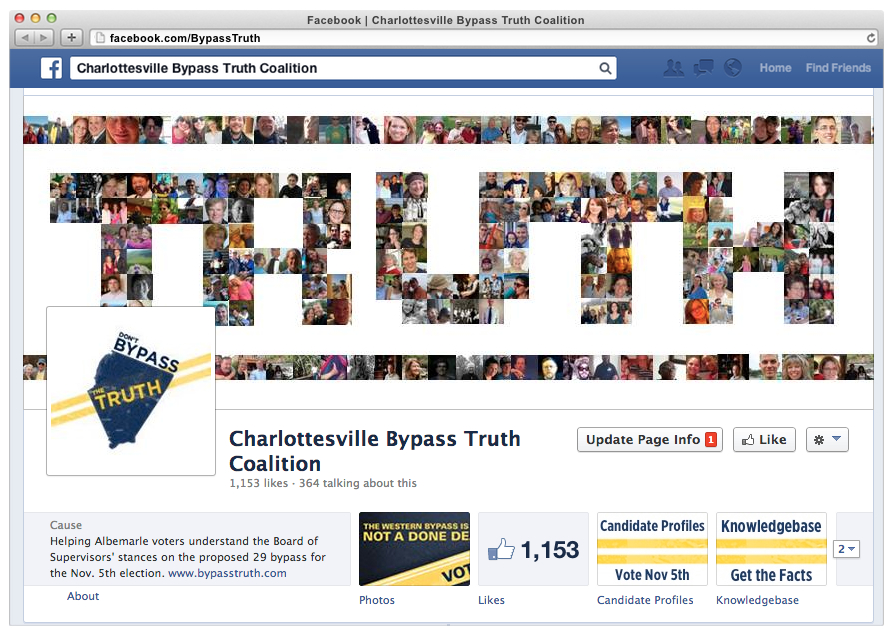
Facebook Page
As the digital hub of the campaign, I designed the Facebook page to be an open community for residents to discuss the issue. The cover photos highlighted coalition members and the custom tabs I created allowed members to see profiles on the Board of Supervisors candidates and reference articles on the progression of the bypass.
Website
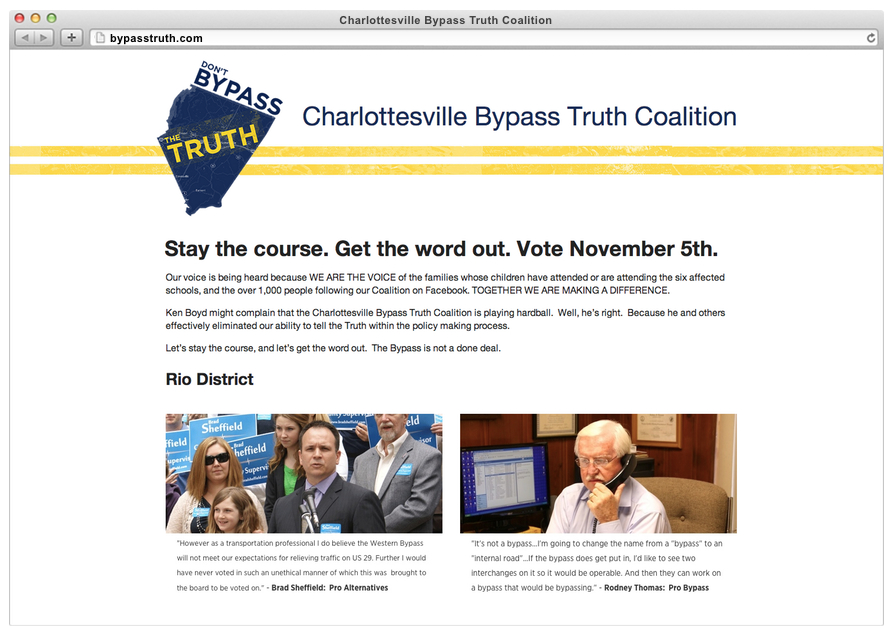
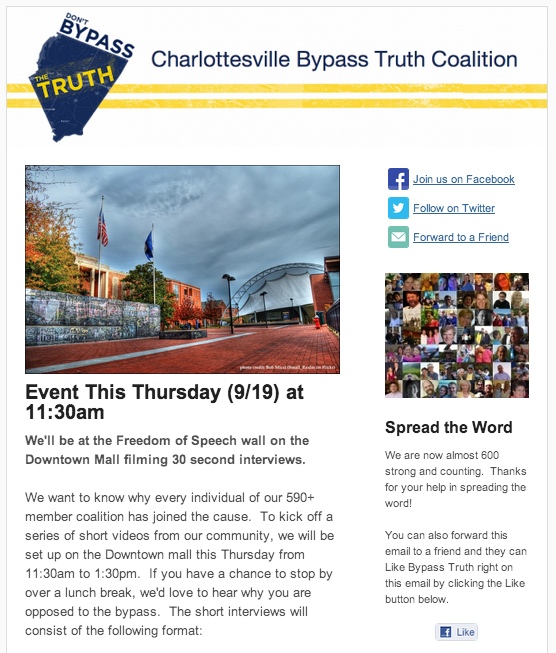
For those Coalition members not as familiar with social media, I updated the Bypass Truth website with news, events, and candidate profiles. The website also allowed members to sign up for the email list and keep up with the latest posts on Facebook and Twitter.
For those Coalition members who wanted to receive updates right in their inbox, I set Bypass Truth up on MailChimp and created an email template that they could use to get the word out about important events and announcements.
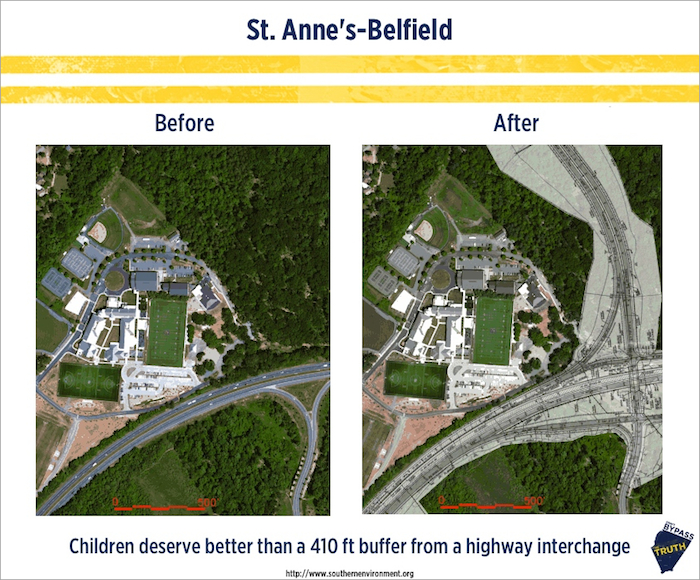
Social Graphics
Using facts about the proposed bypass, I designed marketing graphics that could be posted to the Coalition's social channels that would encourage members to educate themselves, engage in discussion, and ultimately spread the word to other individuals in the community.
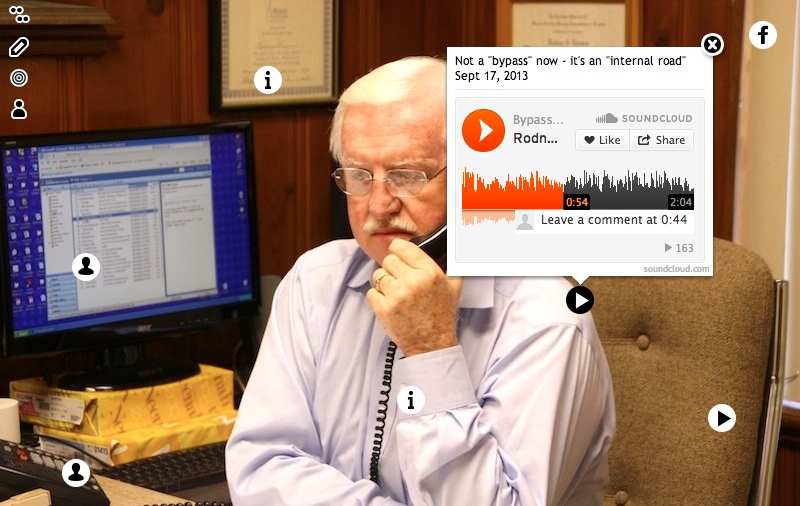
Thinglink
I used Thinglink to combine photos of the candidates with audio, video, quotes, and articles to allow voters the opportunity to explore each candidate's views on the proposed Western Bypass.
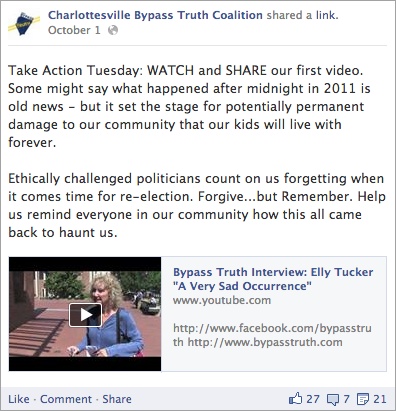
Video Interviews
Interviews by the members of the Coalition were used to put a face to the organization and show that it was made up of concerned individuals wanting alternatives to be considered.
Milestones
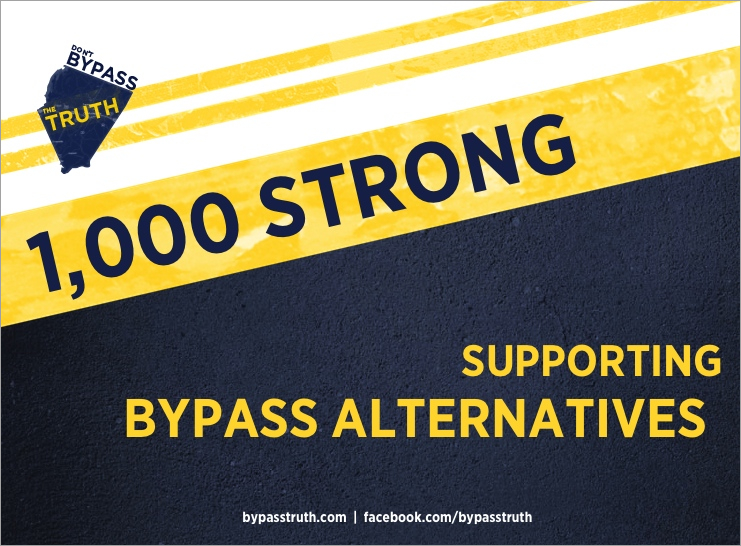
To reinforce the number of individuals who were encouraging alternatives to the proposed bypass, milestones were celebrated on the Facebook page and website.
Press
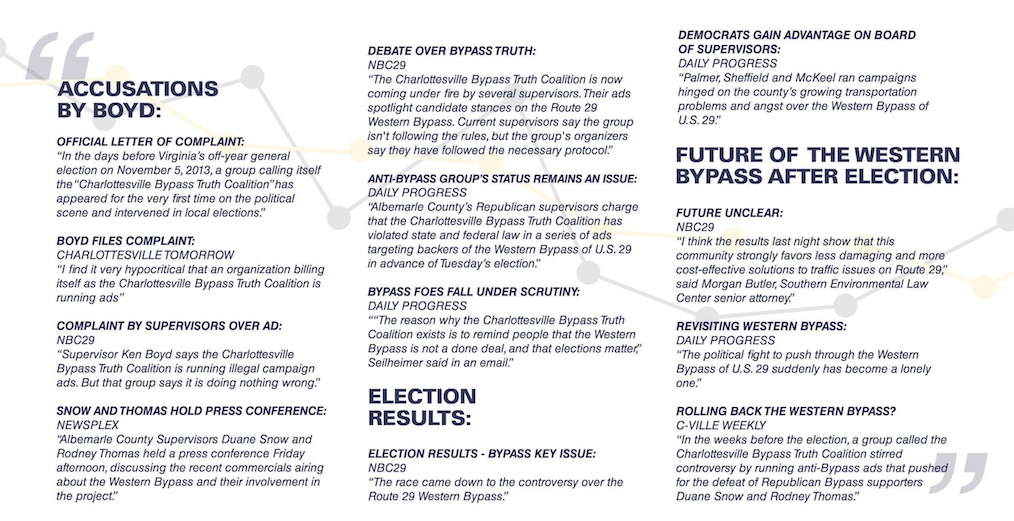
Numerous press articles were generated by The Daily Progress, Newsplex, NBC29, C-ville Weekly, and others discussing the Coalition's role in getting the word out about the Western Bypass and if it could affect future plans for the road.
Tom Tom Founders Festival
Project Description
Tom Tom needed to refocus on innovation after its first year as a music festival. An increase in attendance would show value to its sponsors and audience.
Campaign: Focus the Message
With community members still being confused about what Tom Tom was, I worked with the Vibethink team to consolidate the complex Tom Tom brand into a simple, compelling narrative: "Tom Tom Founders Festival. April 11 - 14. Art, Innovation, and Music. All Free."
Guerrilla Marketing
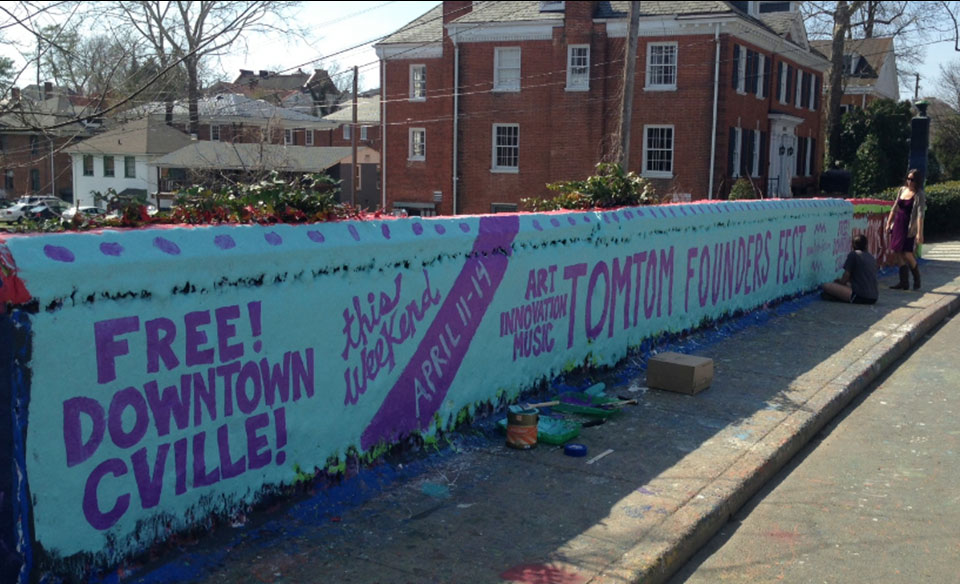
Special concerts, exclusive events, and physical displays were used to generate excitement and build anticipation for the festival that year.
Advertising
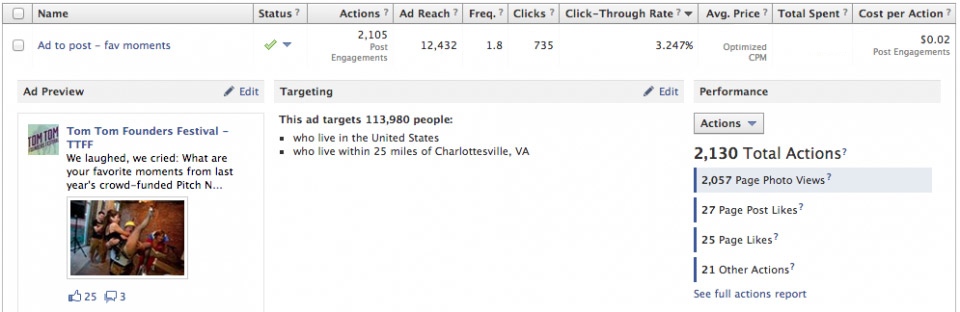
I created digital and social advertising which captured nearly 5 million impressions and 15,000 clicks in the 3 months leading up to the festival.
Social Media
By connecting to the innovation and start-up community in Charlottesville, I helped Tom Tom nearly triple its followers both on Facebook and on Twitter. This also ensured that the messages about the innovation events were heard and attended by the right audience.

Volunteers
The festival had a lot of support from its network of volunteers. I helped coordinate promotional efforts and meetings with the volunteers and the festival staff.
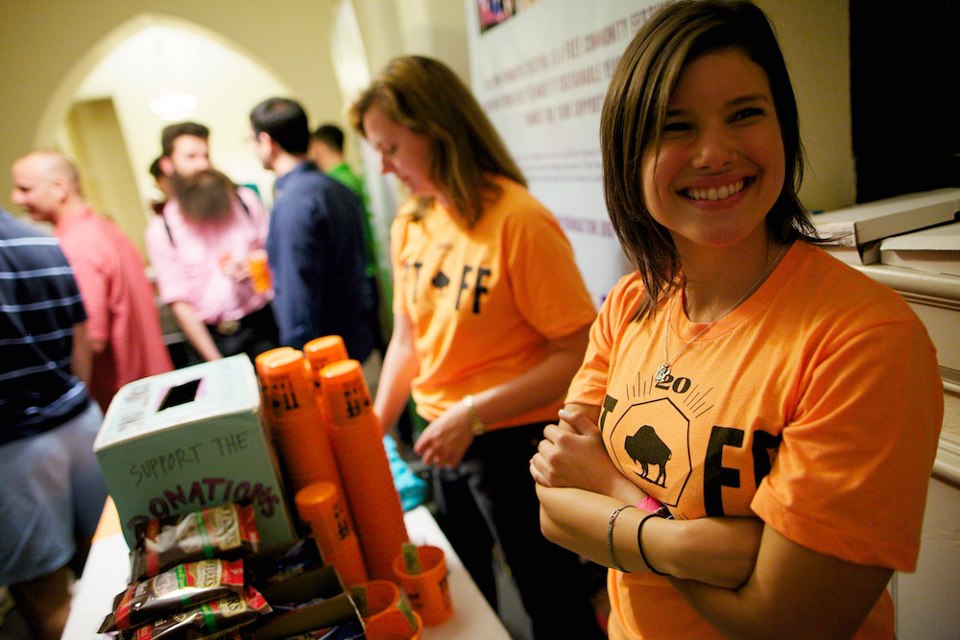
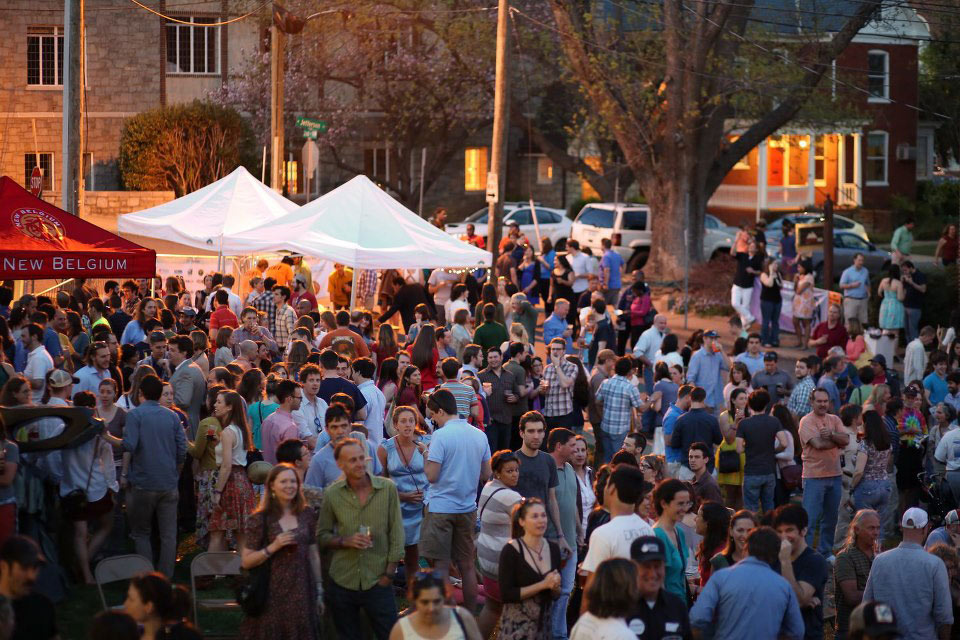
The Event
The Tom Tom Festival had a strong turnout its second year. With a post-festival survey I created, the staff was able to hear back from the attendees about what they enjoyed and what could be improved for next year.
Easy Star All-Stars
Project Description
Easy Star All-Stars are a reggae band who records epic tribute albums. They needed a marketing campaign to excite their large, devoted fanbase for the release of their new album, a cover of Michael Jackson's Thriller entitled Thrillah.
Campaign: Guess the Album
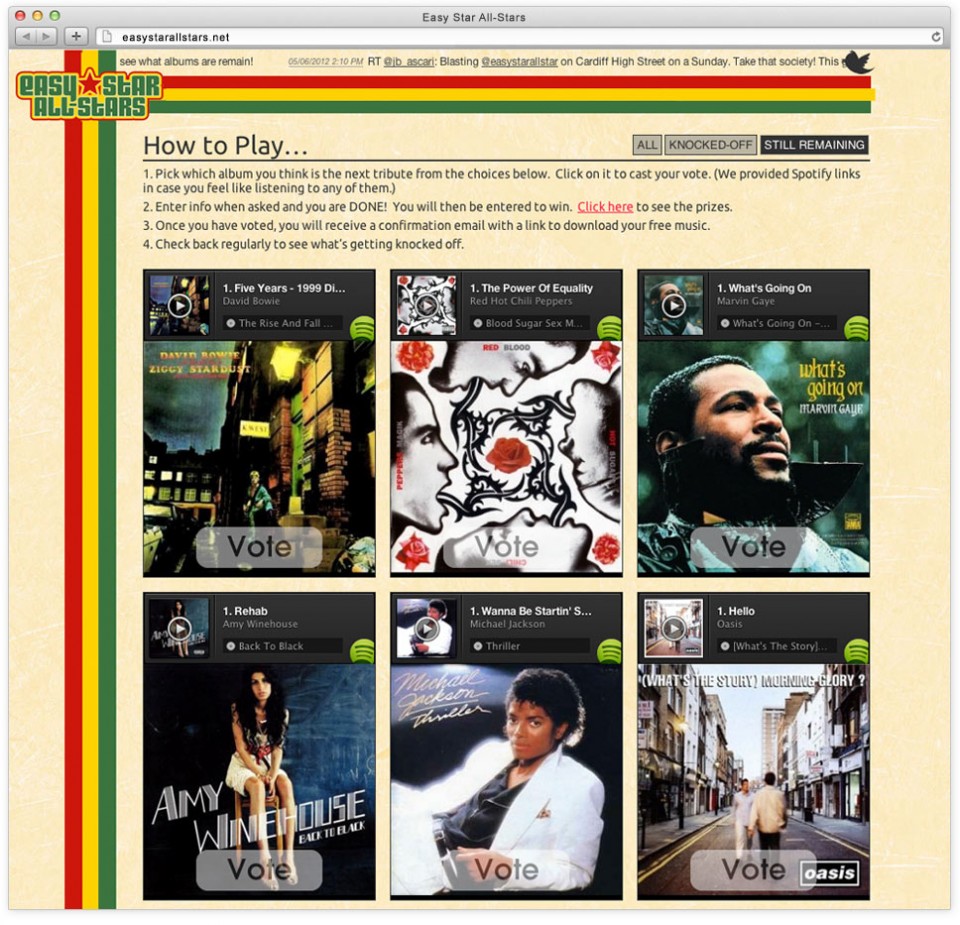
Since fans always loved guessing what the next tribute album would be, I worked with the Vibethink team to turn that experience into a game. Fans were given the opportunity to vote on what they thought the next album would be. The contest generated 5,000 social likes and brought the band 6,000 new email addresses.
The Game
The contest allowed fans to vote on the next tribute album from among 25 classic records. The embedded Spotify players let visitors stream whole albums while casting their votes. After voting, fans were given a free three-track EP and another EP if they chose to share the contest to Facebook.
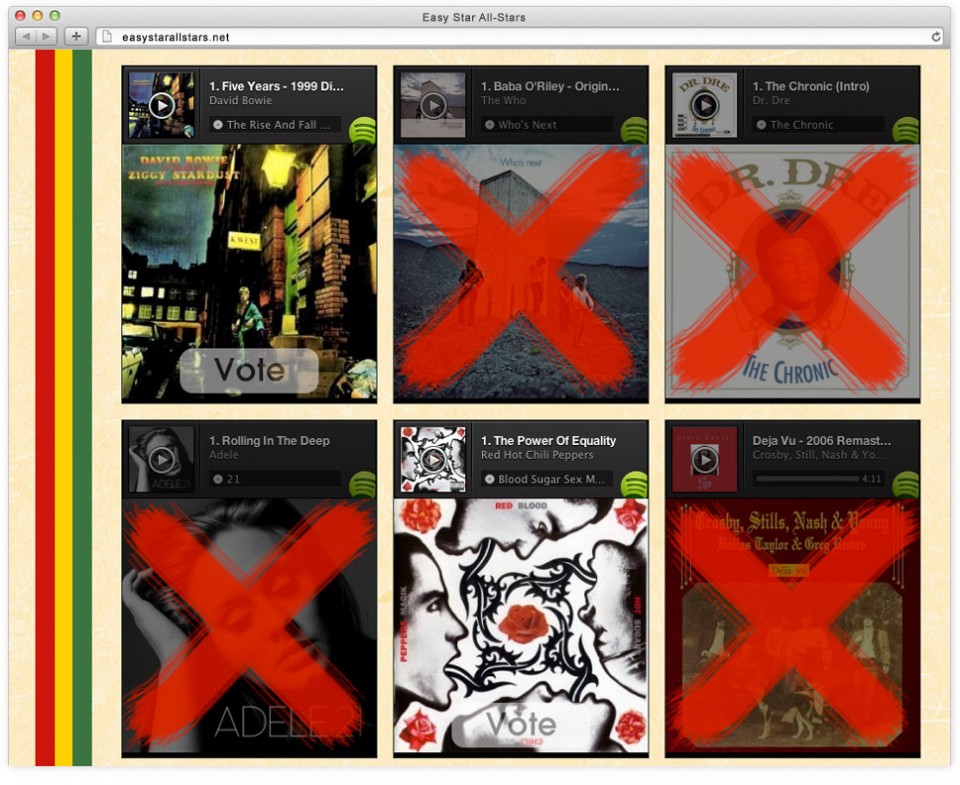
Album Knock Off
Each day over the course of a month an album was eliminated from the list, encouraging repeat visits by curious fans.
Album Reveal
The album was announced to be a tribute to Michael Jackson's Thriller with a new landing page dedicated to the presale and the newly released Billie Jean EP. I went to work promoting the album presale and EP release through social advertising. The ads targeted fans of Easy Star All-Stars along with potential fans who were interested in similar bands.
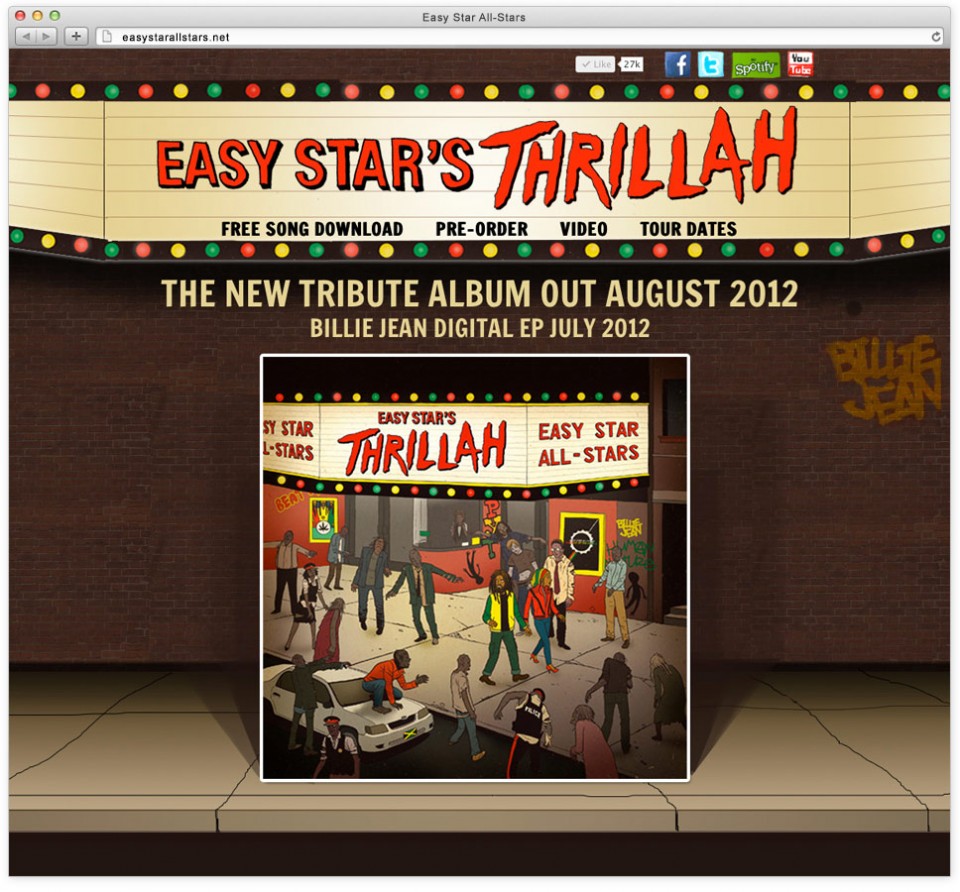
Sharing and Listening
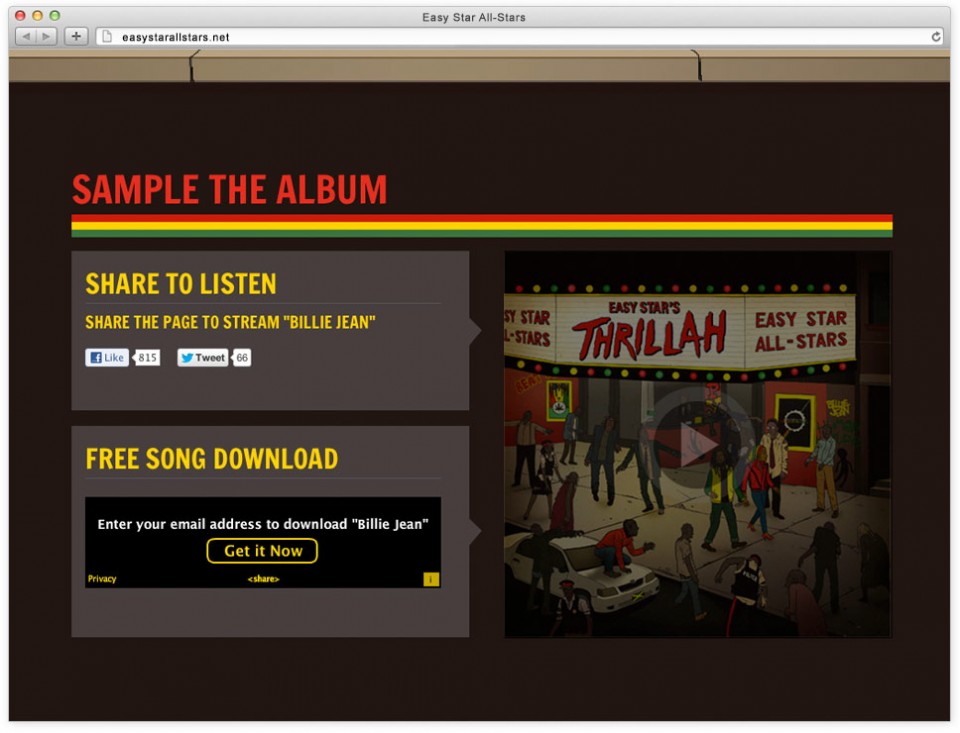
The landing page allowed fans to share the new album release with friends in order to listen to the new single Billie Jean or download it for free by entering their email. The page was shared over 4,000 times on its first day live.
Album Release
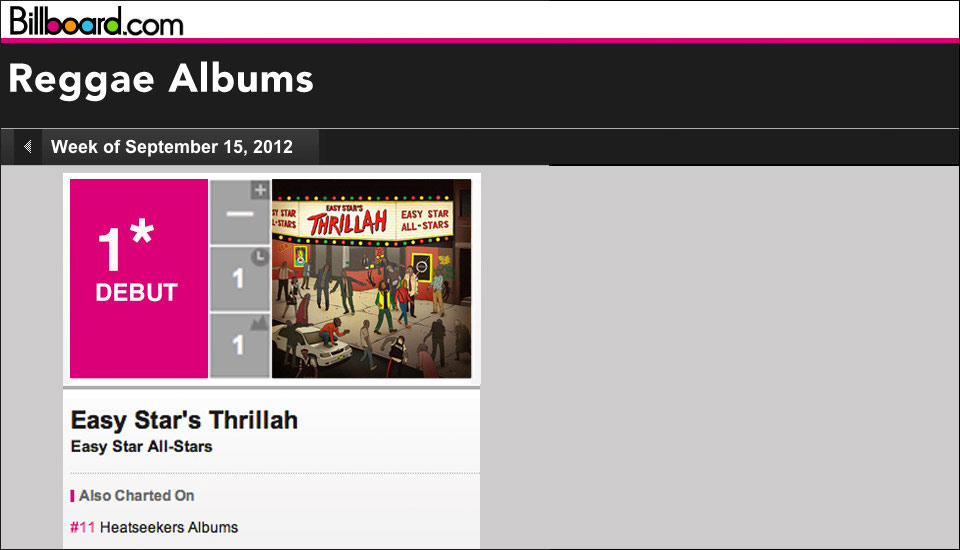
Both Easy Star's Thrillah album and Billie Jean EP debuted at number one on the Billboard Reggae chart when they were released.
SceneThink
Project Description
With national calendar services missing out on local bands and local venues each having their own calendars, there was a need in Charlottesville for a go-to source to find out what concerts were happening, where they were, and when. As an internal project, I worked with the Vibethink team to create SceneThink to meet this need as well as provide a way to discover local and national bands. SceneThink is now being used by C-Ville Weekly as their events calendar.
The Responsive Web App
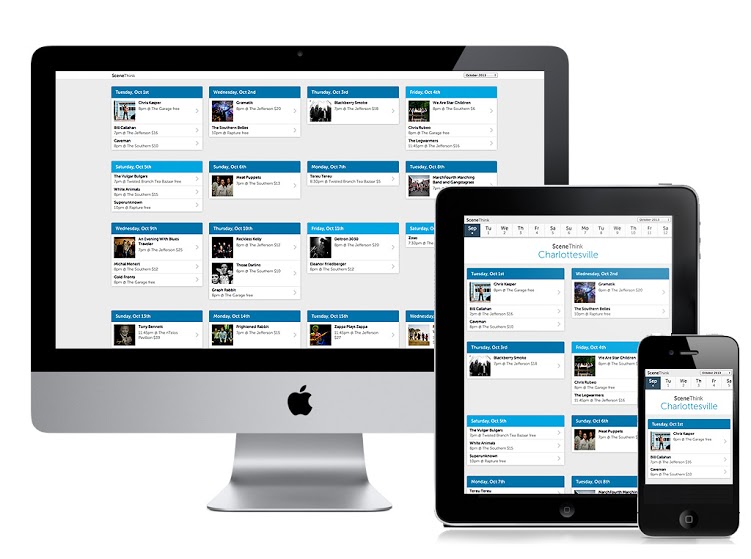
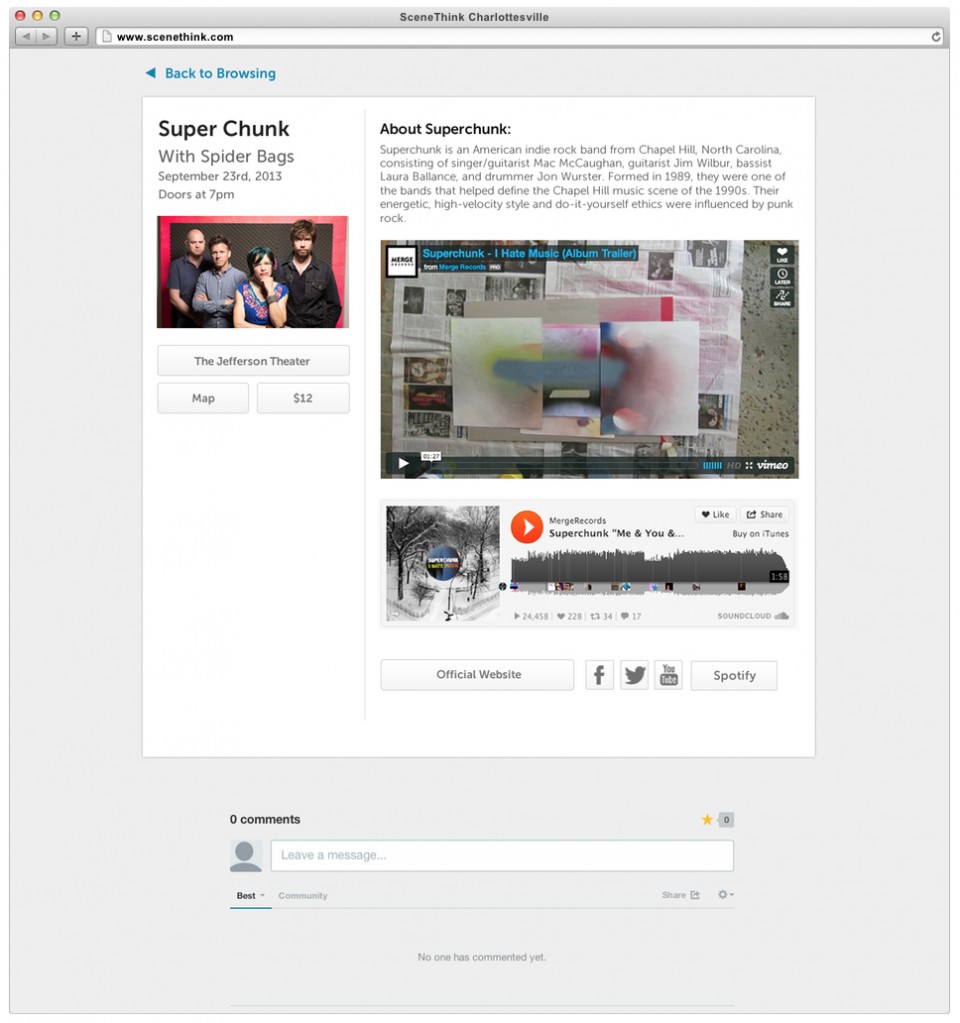
SceneThink was built for users who were looking up concerts on the go. It was developed as a web app that could be downloaded to a phone home screen. The website was also responsive, allowing it to look great on any screen size.
Content Entry
In order for SceneThink to gain traction it had to be functional right away. I scoured the internet and local venues for concert dates, artists, bios, and media to enter into the WordPress backend.
Promotion
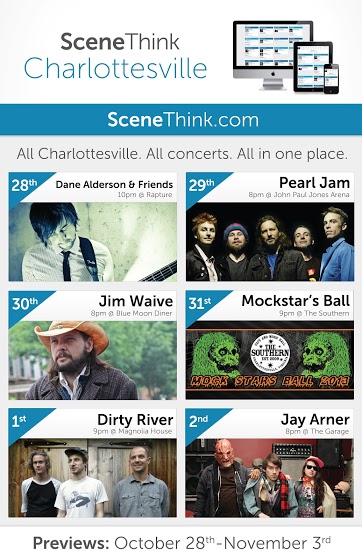
I worked with the team to develop email blasts and posters for SceneThink that would be used to get the word out.
Community Participation
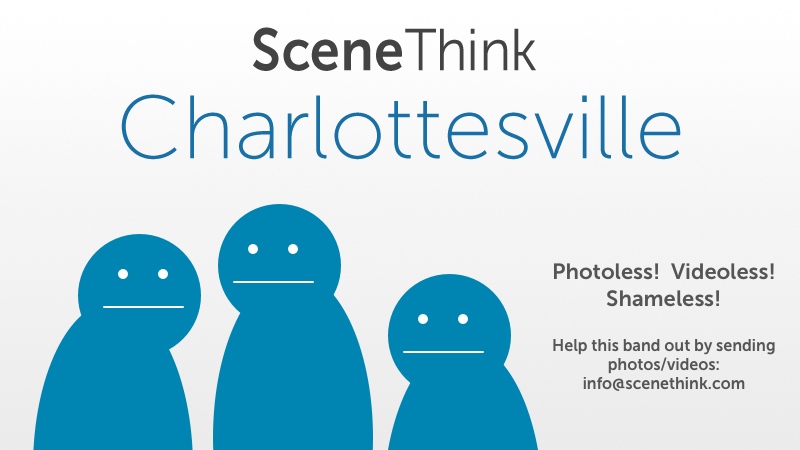
To collect photos and videos of local artists, I designed a graphic to encourage users to submit their own media.
Artist Participation
The local artists were contacted with invitations on their social channels to let them know that they were a part of SceneThink. The musicians were then able to help fill out their profiles and show schedules.